
There was a time when a refrigerator had exactly one job, to keep things cold and frozen as needed.
Fast forward to today, the modern kitchen looks like a scene out of a sci-fi film. Fridges now come equipped with high-definition touchscreens, internal AI cameras, built-in ice sphere makers, and Wi-Fi connectivity. But with price tags very high, a critical question arises for home owners and designers alike: Are smart refrigerators actually worth the splurge, or are they just expensive novelties?
Whether you are remodeling a modern kitchen space or deciding if your next appliance upgrade needs Wi-Fi, here is a practical, no-nonsense look at how smart fridges perform in real daily life.
What Exactly Is a Smart Refrigerator?
At its core, a smart refrigerator connects to your home Wi-Fi network via a smartphone app (such as Samsung SmartThings, LG ThinQ, or Bosch Home Connect).
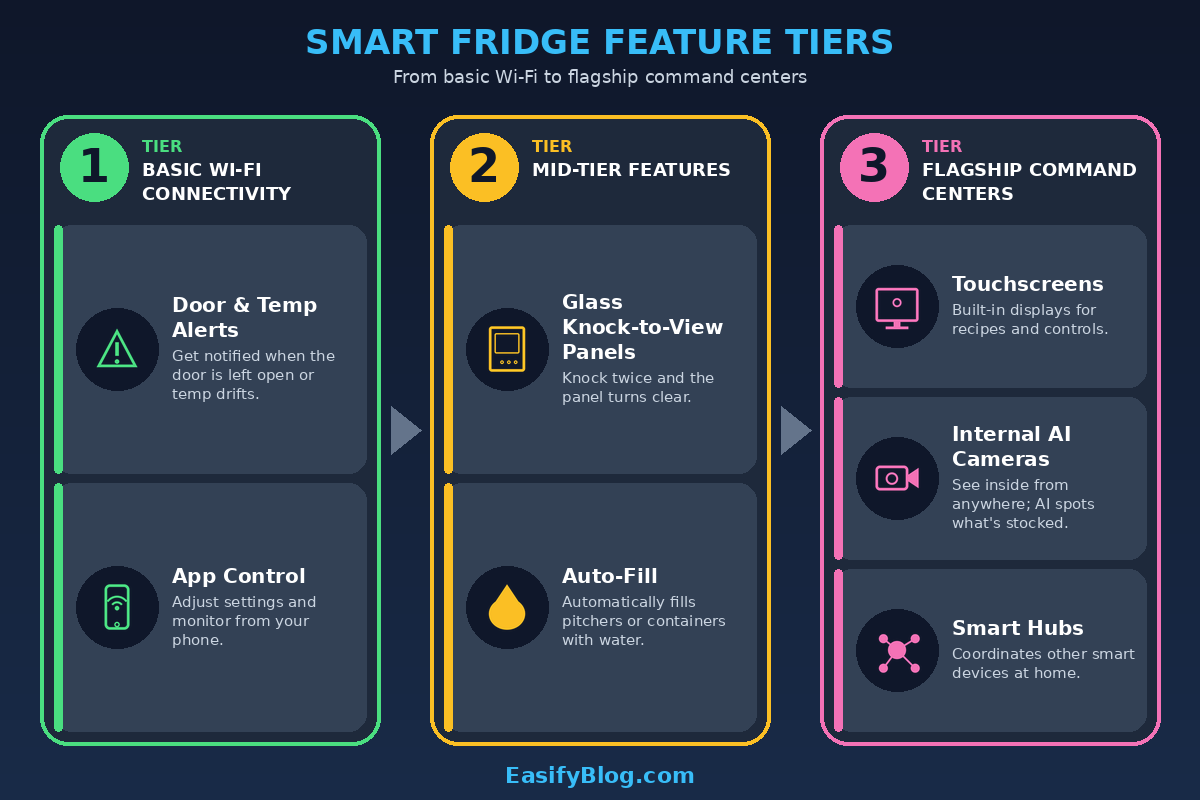 Smart refrigerator feature tiers, from basic Wi-Fi to flagship command centers.
Depending on the tier you choose, smart functionality ranges from simple background features to full-blown digital hubs:
- Entry-Level Smart: Basic Wi-Fi connectivity that sends alerts to your phone if a door is left open or if internal temperatures spike.
- Mid-Tier Smart: Tinted glass panels that light up with a quick knock (like LG’s InstaView) or built-in auto-refilling water pitchers.
- Flagship Command Centers: Door-mounted touchscreens with internal AI-powered cameras, shared digital calendars, recipe hubs, and smart home controls.
The Pros: Features That Genuinely Improve Daily Life
While some features sound like tech gimmicks, several smart functions deliver real, measurable convenience:
1. The “Grocery Aisle” Internal Camera
Have you ever stood in the grocery store aisle wondering if you already had a carton of milk or a tub of sour cream? Models equipped with internal cameras allow you to open your brand’s smartphone app and take a live peek inside your fridge while shopping. It eliminates double-buying, saves money, and reduces food clutter.
2. Instant Door-Open & Temperature Alerts
This is arguably the most valuable feature for everyday reliability. If a child doesn’t push the heavy French door completely shut, or if power fails while you’re away on vacation, your phone instantly receives a push notification. Catching a temperature spike early can save hundreds of dollars in spoiled groceries.
3. Food Waste & Expiration Management
Advanced AI cameras (such as Samsung’s AI Vision Inside) can automatically recognize fresh food items as you place them on shelves. The app tracks freshness window estimates and sends notifications when produce or dairy is nearing its expiration date, helping households cut down on food waste.
4. A Central Family Command Center
Paper sticky notes and physical wall calendars often turn kitchens into chaotic zones. Large door touchscreens allow families to sync Google or Outlook calendars, leave digital notes, display family photo galleries, and pin recipes directly at eye level.
5. Seamless Aesthetic Integration for Kitchen Designers
From an interior design standpoint, smart fridges elevate a kitchen’s modern feel. Flush, handle-less designs, hidden water dispensers inside doors, custom panel-ready options, and sleek dark glass panels give luxury kitchen remodels a clean, high-tech finish.
The Cons: Where Smart Fridges Fall Short
Before making an investment, it is important to consider the trade-offs:
- High Upfront Cost: Standard stainless steel refrigerators usually run between $800 and $1,800. Smart models generally start around $2,000 and easily climb past $4,000 for full touchscreen panels.
- Software vs. Hardware Lifespan Disconnect: A well-built mechanical refrigerator is expected to last 10 to 12+ years. However, software support and app ecosystems evolve rapidly. While major manufacturers guarantee software updates for 5 to 7 years on newer models, there is a risk that built-in screens or app features may feel outdated long before the cooling system fails.
- More Moving Parts to Repair: Adding Wi-Fi control boards, touchscreens, camera modules, and complex door sensors means there are simply more components that can glitch or require specialized service over time.
The Verdict: Who Should (and Shouldn’t) Buy One?
A Smart Refrigerator is worth it if:
- You are building or remodeling a modern, connected smart home and want a sleek focal point.
- You run a busy household that benefits from shared digital calendars, door-open safety alerts, and remote grocery checks.
- You regularly waste money on forgotten groceries or expired produce.
You should SKIP the smart features if:
- You want a simple, budget-friendly appliance focused purely on cooling longevity.
- You dislike navigating phone apps or touchscreen settings to control basic appliances.
- You are concerned about technology becoming obsolete faster than the appliance hardware itself.